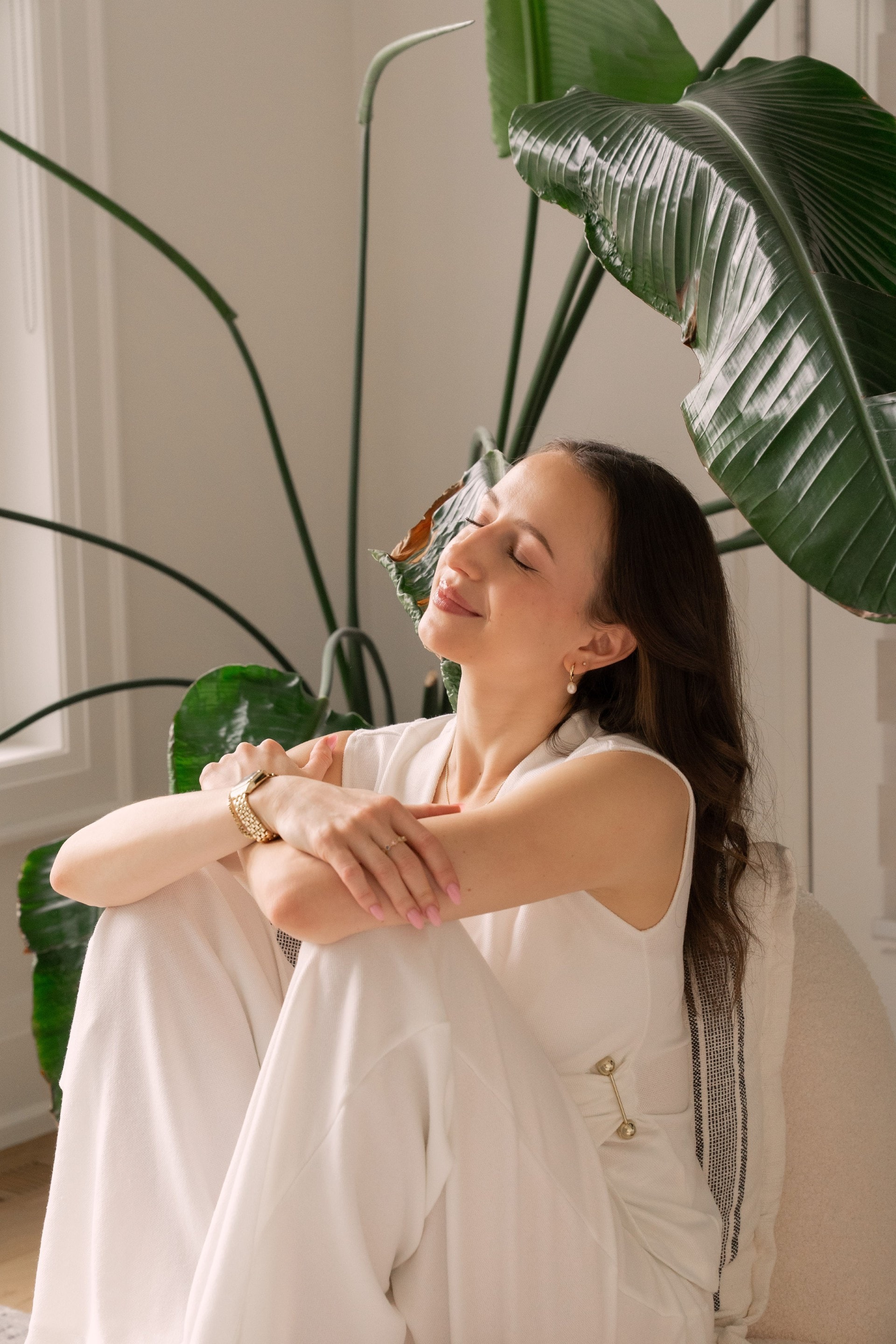
Breathing is automatic and vital, yet the way we breathe often shifts with stress. Short, shallow, chest-centred breathing commonly accompanies sympathetic “fight or flight” activation; slower, comfortable breathing can support parasympathetic “rest and digest” activity and reconnect body and mind.
Breathwork is portable and free. It can offer a practical point of focus when thoughts are racing or the body feels tense, but it should never feel forceful.
1. Diaphragmatic breathing
Rest one hand lightly on your abdomen. Let the breath travel as low as is comfortable without trying to fill your lungs completely. You may notice the abdomen move out a little on the inhale and settle on the exhale. Continue gently for a minute or two.
2. Box breathing
Picture four equal sides of a box: inhale, pause, exhale, pause. Begin with a comfortable count of two or three for each side. Keep the pauses soft rather than gripping or straining, and skip them if holding the breath does not feel good.
3. Alternate-nostril breathing
Close the right nostril gently and breathe in through the left. Switch sides, then breathe out through the right. Inhale through the right, switch, and exhale through the left. That completes one round. Keep the breath natural and stop if nasal breathing is uncomfortable.
4. 1:2 ratio breathing
Let the exhale last a little longer than the inhale. You might begin with an easy count of two in and four out, or three in and five out if doubling feels too long. Do not empty the lungs aggressively; comfort matters more than the exact ratio.
5. Try one physiological sigh
Take a comfortable breath in through the nose, add a smaller second inhale, then release one long, easy exhale through the mouth. One or two rounds may be enough. Pause and notice how you feel before deciding whether to continue.
Using the breath during movement
During stretching or challenging movement, the body may brace. A comfortable, slightly longer exhale can signal safety, reduce unnecessary tension, and help you work with rather than against your body. Never use the breath to force a deeper range of motion.
Where these practices come from
This refreshed guide draws on public breathing guidance from the NHS (opens in a new tab), U.S. Department of Veterans Affairs Whole Health (opens in a new tab), and Cambridge University Hospitals (opens in a new tab).